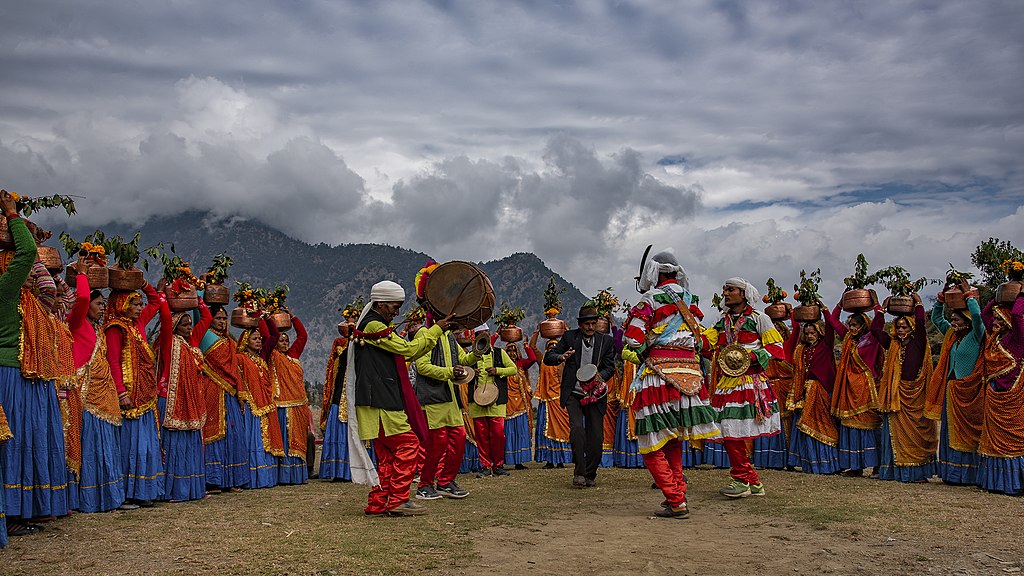
Culture and Festivals of Uttarakhand
The culture of Uttarakhand is deeply rooted in festivals, fairs, and folk traditions. Almost every season and occasion is associated with a celebration. Religious rituals, folk dances, fairs, and pilgrimages are an integral part of life here.
🌊 Ganga Dussehra
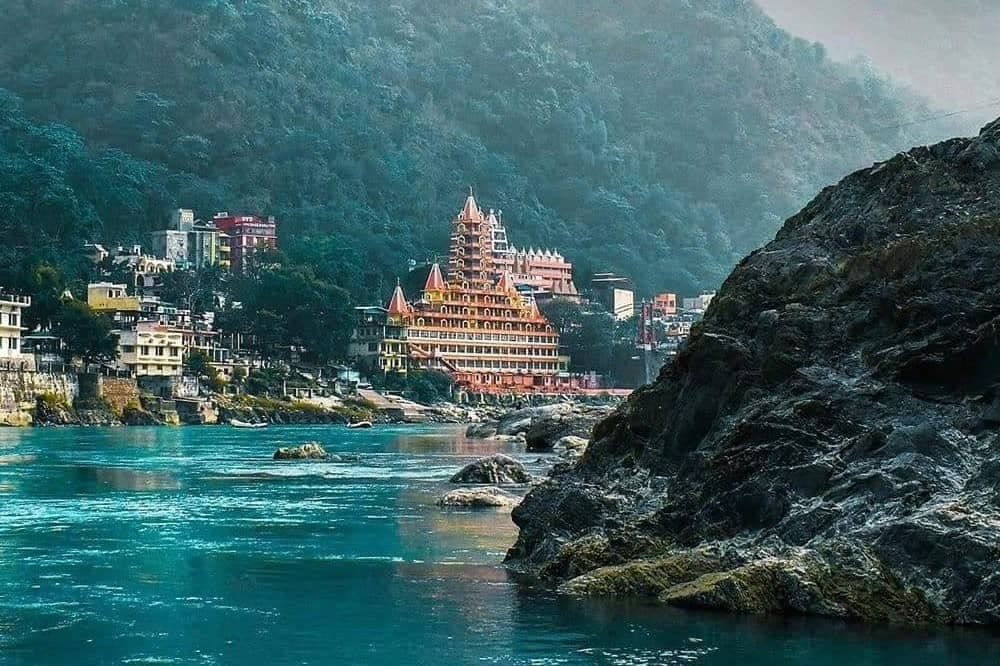
This festival commemorates the descent of the River Ganga to Earth. It is celebrated with great devotion in Haridwar, Rishikesh, and the Garhwal region.
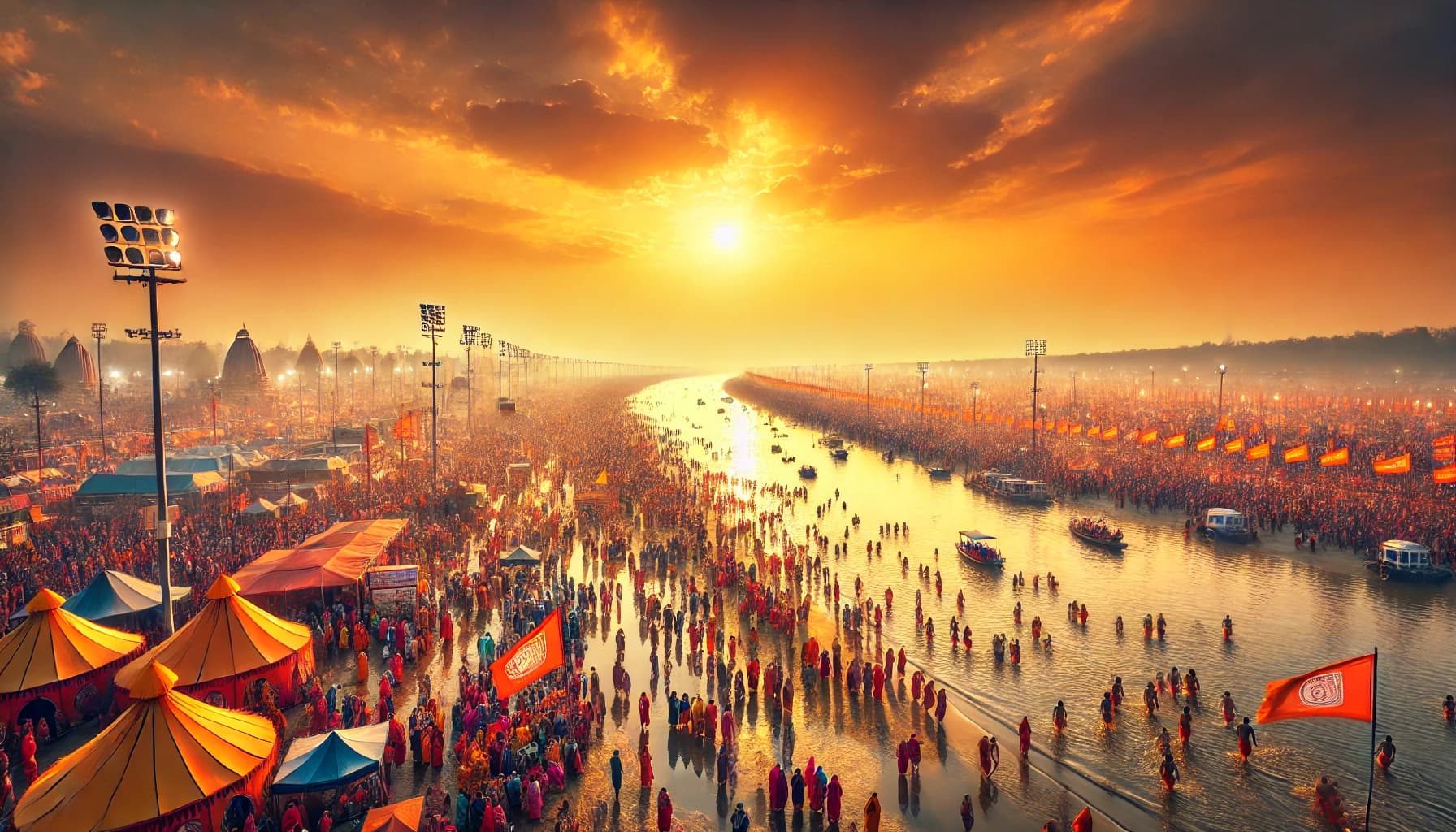
Devotees take a holy dip in the Ganges and participate in the evening Ganga Aarti. Bhajans, kirtans, and the ritual of floating lamps (deepdaan) on the river are important parts of the celebration.
🌾 Baisakhi
Celebrated mainly in the Kumaon and Garhwal regions, Baisakhi marks the harvest season and the beginning of a new agricultural year for farmers.
Villages come alive with traditional dances, the sound of dhol-damau drums, and local fairs. It is a festival celebrating nature’s abundance and the fruits of hard work.
🌸 Phool Dei
This spring festival is especially popular in the Kumaon region.
Children decorate doorsteps with flowers, rice, and leaves as a symbol of prosperity and blessings. They also sing traditional songs while celebrating the arrival of spring.
☀️ Uttarayani Fair (Bageshwar)
Held during Makar Sankranti, this is one of the oldest fairs in Uttarakhand.
Devotees gather at the confluence of the Saryu and Gomti rivers for holy bathing and religious rituals. Cultural programs, folk dances, handicraft markets, and traditional performances are major attractions.
🤝 Jhoolaghat Fair
Held at Jhoolaghat on the India-Nepal border, this fair symbolizes cultural exchange between the two countries.
People from both sides participate, showcasing handicrafts, folk music, traditional food, and friendly cultural interaction.
🥁 Hill Jatras
In many villages of Uttarakhand, processions of local deities are known as Hill Jatras.
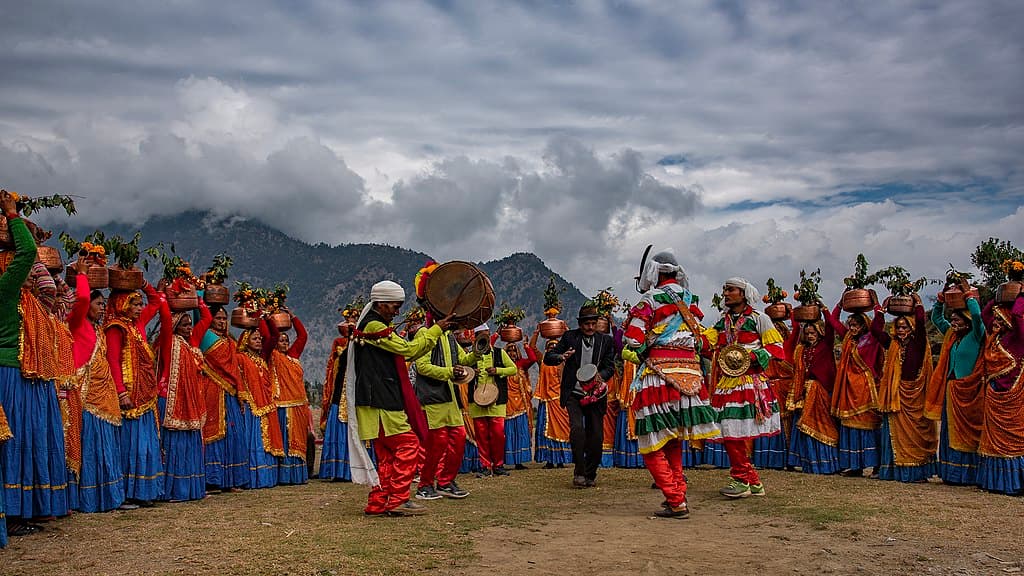
The palanquins of deities are carried from village to village accompanied by the rhythm of dhol-damau drums, folk songs, and community worship.
🎭 Ramlila (Garhwal Style)
In the Garhwal region, Ramlila is performed in a unique folk style.
Local language, music, and theatrical expressions are combined to narrate the story of Lord Rama. It plays an important role in strengthening religious and cultural identity.
🛡️ Bagwal Fair (Champawat)
This unique fair is held at the Barahi Temple in Devidhura on the day of Raksha Bandhan.
During the event, two groups symbolically throw stones at each other as part of an ancient tradition believed to represent courage, sacrifice, and faith.
👑 Nanda Ashtami
This festival is dedicated to Goddess Nanda and is widely celebrated in Chamoli, Pithoragarh, Bageshwar, and the Kumaon region.
Palanquins of the goddess travel through villages while women sing devotional songs and men participate in dances and rituals. The festival symbolizes the bond between a mother and daughter.
🕉️ Dev Worship and Folk Dances
Every village in Uttarakhand has its own local deity.
Religious rituals include devotional singing, jagar ceremonies, folk dances such as Chholiya and Thali dance, and the sound of traditional instruments like damau.
🏔️ Nanda Devi Raj Jat Yatra
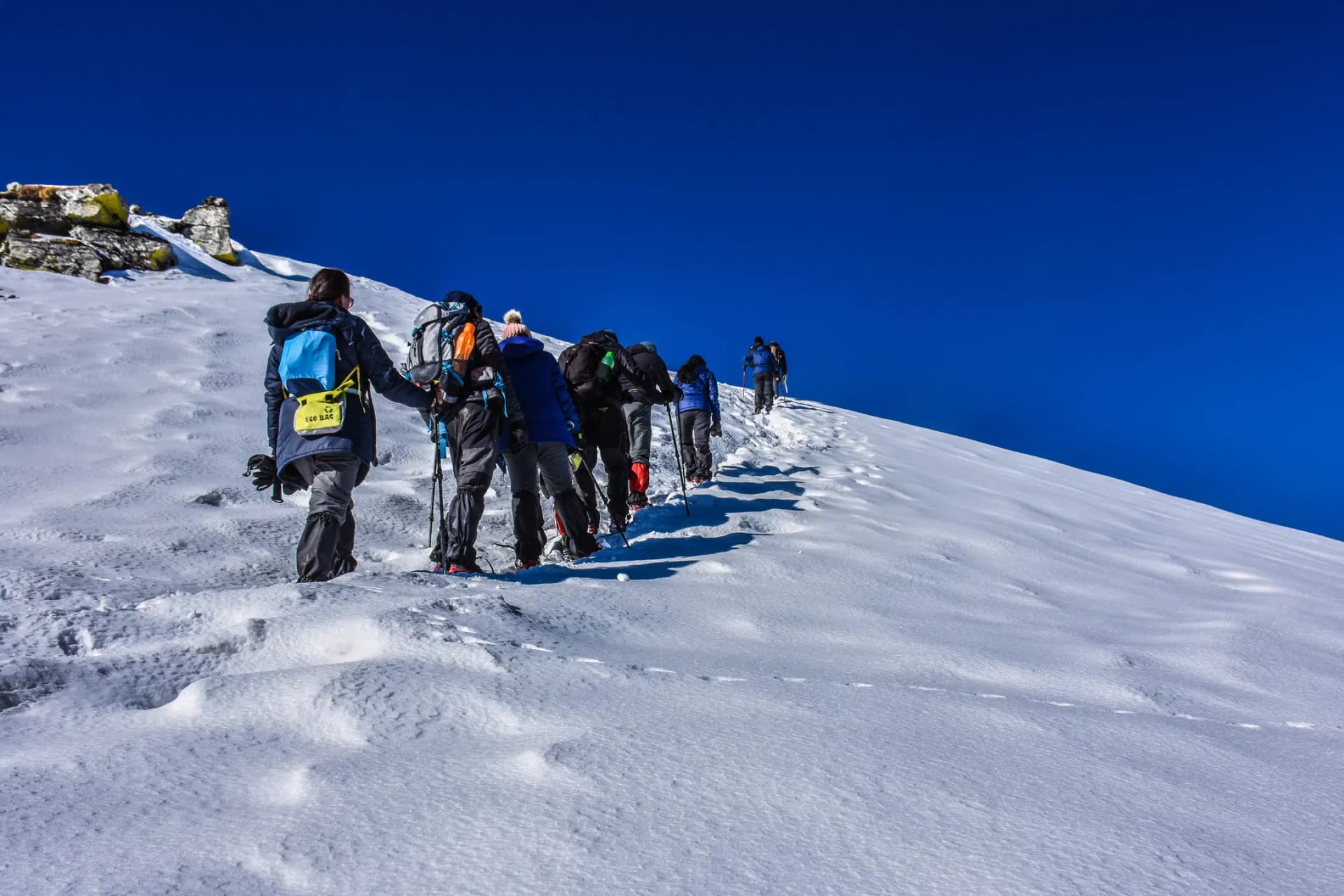
This is one of the most sacred and mystical pilgrimages of Uttarakhand, held once every 12 years.
The journey begins from Kurud village in Chamoli district and continues to Homkund in the high Himalayas.
Often called the “Himalayan Kumbh,” the pilgrimage involves participation from more than 100 villages. The procession includes palanquins, folk songs, jagar traditions, and collective devotion.
🛶 Other Important Fairs and Festivals
- Kanvashram Fair (Kotdwar): A religious and cultural fair held at the ancient meditation site of Sage Kanva.
- Manaskhand Fair (Kumaon): Dedicated to preserving regional culture and heritage.
- Devshayani Ekadashi: Special rituals are performed in Haridwar and Badrinath.
- Gwel Devta Worship: A festival dedicated to the revered local deity of justice.
- Kali Puja and Bhagwati Jagar: Night rituals and devotional singing dedicated to the goddess.
Culture of Uttarakhand
The culture of Uttarakhand has grown in the lap of the Himalayas and is deeply connected with nature and spirituality. The people here are simple, religious, nature-loving, and deeply attached to their traditions.
🎨 1. Lifestyle and Living Traditions
In many villages, traditional lifestyles are still preserved. Houses are often built with wood, stone, and sloping roofs suitable for mountain climates.
Community farming, cattle rearing, and worship of local deities remain an important part of rural life.
🧥 Traditional Attire
Women traditionally wear ghaghra, choli, and odhani in Kumaon, while Garhwali women often wear ghilat or pichora.
Men commonly wear dhoti-kurta and traditional caps, and during festivals they may wear ceremonial attire like chola-daman.
🎵 Folk Music and Songs
Popular folk music styles include Jagar, Barahmasa, Pawada, and Thadya songs.
Traditional instruments such as dhol, damau, ransingha, and hudka are commonly used in performances.
💃 Folk Dances
Traditional dances performed during festivals, weddings, and pilgrimages include:
- Chholiya Dance (Kumaon): A warrior-style dance symbolizing bravery.
- Thali Dance: Women perform while balancing lamps on metal plates.
- Jhora and Chanchari: Group dances performed in circular formations.
🍛 Cuisine of Uttarakhand
The food of Uttarakhand is simple, nutritious, and closely connected to nature.
Popular dishes include Bhatt ki Churkani, Phanu, Kaapa, Ras, Aloo ke Gutke, Jhangora Kheer, Mandua Roti, and Gahat Dal.
Festival sweets such as Arsa, Singori, and Bal Mithai are also famous.
🏠 Architecture
Traditional houses are built in the Kath-Kuni style using wood and stone, which makes them resistant to earthquakes.
Temples in Garhwal and Kumaon show influences of Nagara and Himalayan architectural styles.
🗣️ Languages and Dialects
- Garhwali (Garhwal region)
- Kumaoni (Kumaon region)
- Jaunsari (Jaunsar region)
Hindi is widely spoken across the state.
🌾 Folk Beliefs and Traditions
Every village has its own presiding deity. Processions of deity palanquins, devotional singing, and ritual ceremonies remain an essential part of community life.
🎓 Handicrafts and Art
Local artisans are skilled in wood carving, woolen garments, handmade shawls, caps, and copper utensils. Places like Ramgarh and Ranikhet are known for handicrafts and traditional weaving.
🧘 Yoga, Meditation, and Spirituality
Rishikesh is known as the “Yoga Capital of the World.”
The region promotes a lifestyle based on simplicity, natural living, pure food, and spiritual practices like yoga and meditation.