India’s local-first travel ecosystem — book local operators direct, zero commission

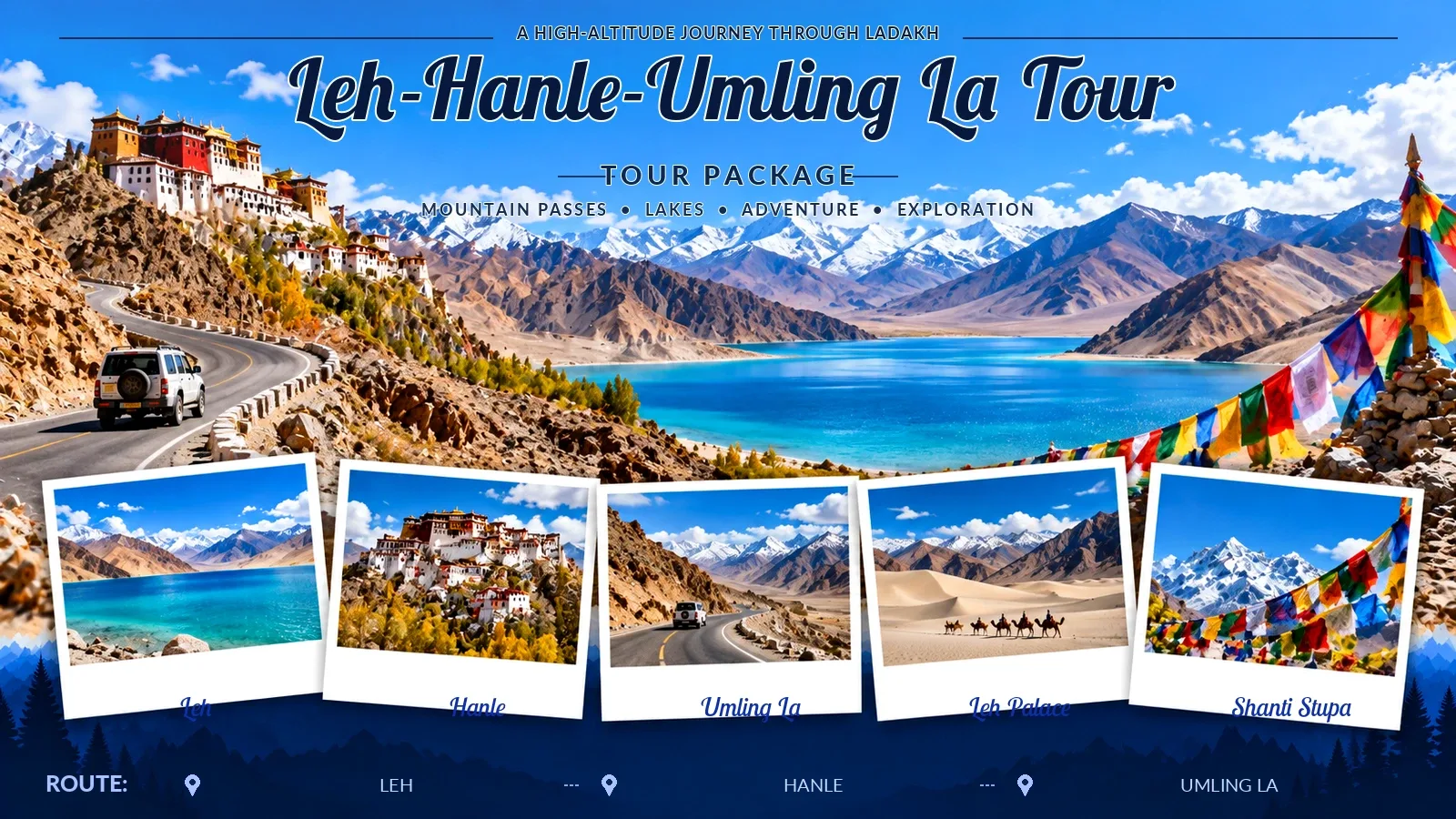
Leh–Hanle–Umling La Tour
Discover remote Ladakh landscapes with careful high-altitude preparation.
Leh–Hanle–Umling La Tour
More info about destination
About this trip
Leh Hanle Umling La Tour is a route-focused journey through some of the most striking landscapes and cultural settings associated with Ladakh and the wider Himalayan region. This package is designed to help travellers plan realistically, understand high-altitude conditions and decide which experiences matter most to their group. Distances can be substantial, roads and passes may be affected by weather or local restrictions, and the final route must be confirmed close to departure. Destination highlights in this description are suggestions for planning and do not automatically mean that every transfer, ticket, permit, activity or service is included.
Route Character and Scenery
Leh–Hanle–Umling La Tour can bring together open valleys, dramatic mountain passes, rivers, high-altitude lakes, remote settlements and heritage sites, depending on the route selected. The experience is often as much about the journey between destinations as it is about individual stops. Allow time for scenic pauses, changing weather and unexpected delays instead of treating the route as a fixed sequence that must be completed at any cost.
Before confirming, ask the provider to explain the proposed route, expected driving hours, overnight locations and any alternatives if a road is closed. Long-distance mountain travel can be tiring, so realistic daily distances and adequate rest are essential to a comfortable experience.
Acclimatisation and High-Altitude Safety
Many Ladakh destinations sit at high elevation, and some routes include very high passes or remote areas with limited services. Plan time for acclimatisation, especially when arriving from a much lower altitude. Follow current medical guidance, avoid strenuous activity during the initial adjustment period and seek prompt help if symptoms such as severe headache, nausea, dizziness or unusual breathlessness develop. Do not continue to higher elevations when feeling unwell.
Travellers with existing health concerns, children, older adults or anyone unsure about altitude should seek individual medical advice before booking. Ask the provider about the elevation profile, emergency arrangements, communication coverage and access to medical assistance. A responsible plan prioritises health and safety over completing every planned stop.
Culture and Heritage Along the Way
Himalayan routes pass through communities with distinctive traditions, languages, food, crafts and religious heritage. Monasteries and other sacred places should be approached respectfully: follow posted rules, dress appropriately, keep noise low and ask before taking photographs. Access may be limited during ceremonies, conservation work or local events, so check opening arrangements rather than assuming every site will be accessible.
In villages, respect private property and ask permission before photographing residents. Consider supporting local shops, homestays, guides and artisans when appropriate. Responsible visitors help preserve the character of the region and contribute positively to the communities that make travel meaningful.
Season, Roads and Permits
The most suitable season for Leh–Hanle–Umling La Tour depends on the exact route, elevation and current road access. Summer generally opens more mountain routes, but conditions can still change quickly. Spring and autumn may offer quieter travel while bringing uncertainty around pass openings, temperatures and services. Winter journeys can be especially demanding and may be unsuitable for some routes. Remote lakes, border-region villages and high passes may have permit or access requirements that change over time.
Check official road updates, weather forecasts, local advisories and permit requirements shortly before departure. Do not rely solely on older itineraries or social media posts. Keep flexibility in the schedule and confirm what happens if a road is closed, a permit is delayed or weather makes a planned stop unsafe.
Responsible Travel in Fragile Landscapes
Ladakh’s high-altitude environment is beautiful but sensitive. Carry litter back to appropriate disposal points, minimise single-use plastics where possible, remain on established paths and avoid disturbing wildlife or fragile wetlands. At lakes and remote campsites, follow local rules for vehicle access, fires, camping and waste. Do not assume that a remote location has toilets, bins, fuel or mobile coverage.
Photography, stargazing and scenic stops should be planned with consideration for residents and other travellers. Keep lighting low in dark-sky areas, avoid loud music in quiet settlements and never trespass for a better view. Leave each place in good condition for the people who live there and the visitors who follow.
Comfort, Packing and Practical Preparation
Pack layered clothing, a warm outer layer, sun protection, sunglasses, comfortable shoes, valid identification, booking details and personal medication. Conditions can vary significantly between sunny afternoons and cold evenings. Keep water and snacks available for long drives, and discuss motion sickness or other travel needs with a healthcare professional if necessary. For camping or remote stays, confirm the facilities and equipment that will be provided rather than assuming a particular standard.
Before booking, share your travel dates, group size, accommodation preferences and any accessibility or dietary requirements. Ask whether local guides, permits, specialist vehicles or additional equipment are needed. Clear written details help avoid confusion about what is included and what may cost extra.
Building a Flexible Expedition
A successful Leh–Hanle–Umling La Tour balances ambition with flexibility. Some travellers want landscape photography and quiet viewpoints; others are more interested in monasteries, villages, lakes or the challenge of a long mountain road. Tell the provider which priorities matter most and ask how much time will be available at each major stop. A slightly less crowded schedule can create a more rewarding trip than trying to cover too many distant places in a short period.
For routes that connect multiple regions, confirm whether the start and end points differ, how luggage is handled, where fuel and meals can be found and whether overnight accommodation is available along the way. For very remote destinations, ask about contingency planning, communication options and any restrictions on independent travel. Final arrangements should reflect current official guidance and conditions on the ground.
Frequently Asked Questions
How should I prepare for high altitude?
Discuss your route and elevation profile with the provider, allow time for acclimatisation and follow current medical advice. Seek help promptly if symptoms develop.
Can the route change because of weather?
Yes. Mountain roads, passes and remote destinations can be affected by weather, road closures or local restrictions. Confirm contingency arrangements before departure.
Do I need permits for every destination?
Requirements vary by route and may change. Ask the provider to identify current permits or permissions needed and confirm official requirements before travel.
Are all listed stops and services included?
Not automatically. The description gives planning highlights. Confirm transport, accommodation, guides, permits, meals, tickets and optional charges in the written package details.
What should I check before confirming?
Review travel dates, route, overnight stops, expected driving hours, cancellation terms, emergency arrangements and the provider’s plan for unexpected delays.
Wayntra app
Plan Your Next Trip with Wayntra
Book verified travel packages, track your itinerary and manage everything from the Wayntra app.