India’s local-first travel ecosystem — book local operators direct, zero commission


Spiti Valley Tour Package
Explore Himalayan Monasteries, High-Altitude Villages and Cold-Desert Landscapes
Spiti Valley Tour Package
More info about destination
🏕️ Stay | 🚗 Transport | 🍽️ Meals | 🏞️ Sightseeing |
About this trip
Spiti Valley Tour Package – Discover the Himalayan Cold Desert
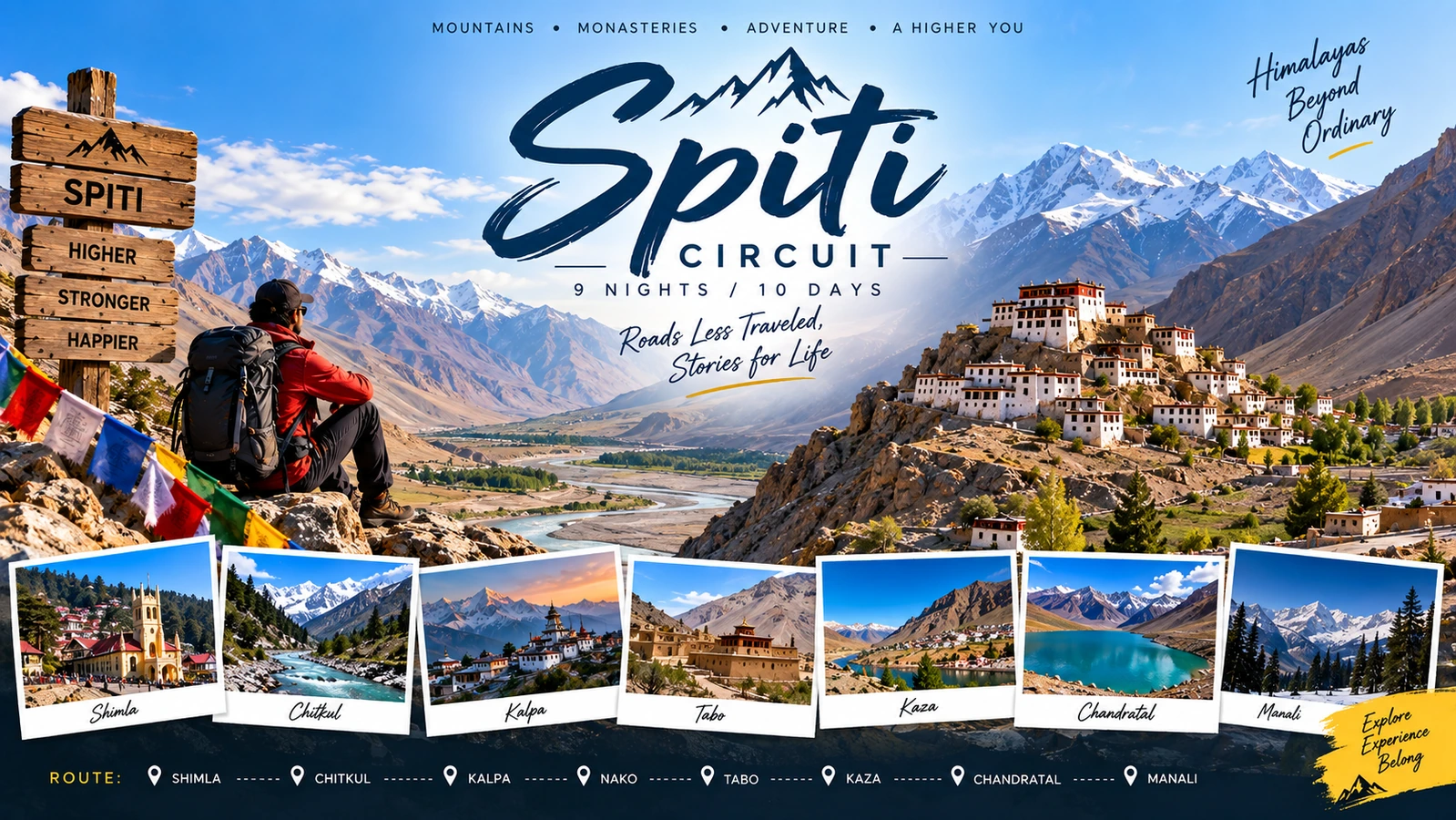
The Spiti Valley Tour Package invites you to explore one of Himachal Pradesh’s most distinctive mountain regions, known for its rugged cold-desert landscapes, ancient Buddhist monasteries, remote villages and dramatic Himalayan roads. Far from crowded city life, Spiti offers an experience shaped by high mountains, deep valleys, traditional settlements and a rich cultural heritage.
Whether you enjoy scenic road trips, photography, village exploration or learning about Himalayan Buddhist traditions, Spiti offers a memorable journey through a landscape unlike the greener valleys of Himachal Pradesh. The final travel route, duration, accommodation and included activities should be confirmed according to the season and supplier arrangements.
Explore Kaza – The Heart of Spiti Valley
Kaza is the principal town and a useful base for exploring the surrounding region. Visitors can browse the local market, experience local food, prepare for day trips and discover the landscapes along the Spiti River. Kaza also provides access to several well-known villages and monasteries, making it an important stop on many Spiti itineraries.
The town has basic services, shops and accommodation options, although facilities are more limited than in larger cities. Travellers should carry essential medicines, keep some cash available and prepare for variable mobile connectivity in remote areas.
Visit the Iconic Key Monastery
Key Monastery, also spelled Ki or Kye, is one of Spiti’s best-known landmarks. Set on a hill above the valley, the monastery is recognised for its traditional architecture, prayer rooms, murals and Buddhist heritage. Its location offers striking views of the surrounding mountains and settlements.
Visitors should dress respectfully, follow monastery instructions and ask permission before photographing people or restricted interiors. Monastery visits should be planned around opening arrangements and local religious activities.
Discover Tabo and Dhankar
Tabo is renowned for its historic monastery, traditionally dated to 996 CE. Its temples, murals and religious art make it an important cultural destination in the region. The village provides a different perspective on Spiti, combining traditional settlement patterns with the surrounding dry mountain terrain.
Dhankar is known for its dramatic cliffside monastery overlooking the valley. Depending on the confirmed itinerary and local conditions, travellers may also explore the village and consider the route towards Dhankar Lake. Any hike should be assessed for difficulty, available time and weather.
Experience Spiti’s High-Altitude Villages
The villages around Kaza reveal the everyday life and landscapes of Spiti. Kibber is known for its high-altitude setting and nearby wildlife habitat. Langza is recognised for its large Buddha statue and fossil-rich surroundings, while Hikkim is famous for its post office. Komic offers expansive mountain scenery and a distinctive village atmosphere.
These destinations are generally explored by road from Kaza, but travel times can vary because of road conditions, weather and stops. The final itinerary should prioritise realistic driving times rather than trying to cover every village in one day.
Explore Chandratal and the Himalayan Road Journey
Chandratal, also called the Lake of the Moon, is a celebrated high-altitude lake in the wider Lahaul-Spiti travel region. Its blue waters and mountain setting can make it a highlight of a summer road trip. However, it is not automatically accessible on every Spiti route. The Manali–Kaza road and access near Kunzum Pass can be affected by snow and seasonal closures.
If Chandratal is included, the supplier must confirm the route, overnight stay, access conditions and available transport. The lake visit should not be advertised as guaranteed for dates when the road or approach is closed.
Best Time to Visit Spiti Valley
Spiti’s travel season depends on the route and weather. The Shimla–Kinnaur approach and the Manali–Kaza approach can have different operating windows. High passes and connecting roads may close because of snow, while rain, landslides or road damage can cause delays.
Summer and early autumn are commonly considered for road journeys, but no particular road opening or weather condition should be guaranteed. Travellers should check official road advisories shortly before departure and allow flexibility in their schedule.
Accommodation, Transport and Local Food
Accommodation may include hotels, guesthouses or homestays, depending on availability and the selected route. Property names, categories, room types and meal plans must be confirmed before booking. Travellers can find local eateries serving regional and Tibetan-influenced dishes, including momos and thukpa, but meals should be treated as included only when specified in the package.
Spiti is a remote, high-altitude destination. A suitable vehicle, experienced driver and realistic travel schedule are important. Confirm fuel stops, pickup points, luggage limits, overnight stays and contingency arrangements before departure.
Travel Responsibly in the Himalayas
Spiti’s high altitude can affect visitors differently. Allow time to acclimatise, stay hydrated and avoid strenuous activity if you develop symptoms of altitude illness. Seek medical advice before travelling if you have concerns about high-altitude exposure. Medical facilities are limited in remote areas, so travel insurance and a practical emergency plan are worth considering.
Respect local customs, religious sites and village life. Carry waste back to designated disposal points, avoid disturbing wildlife and stay on established routes. Follow local instructions during road closures and do not attempt unsafe detours.
Plan Your Spiti Journey with WAYNTRA
The Spiti Valley Tour Package from WAYNTRA can be tailored around your preferred travel dates, starting point and sightseeing interests, subject to supplier availability. Before booking, review the final itinerary, accommodation, transport, meals, seasonal road access and all inclusions.
Contact WAYNTRA to request a confirmed quotation and plan your journey through the spectacular landscapes and cultural heritage of Spiti Valley.
Frequently Asked Questions
What are the main attractions in Spiti Valley?
Key Monastery, Tabo Monastery, Dhankar, Kaza, Kibber, Langza, Hikkim and Komic are popular highlights. Chandratal depends on the route and seasonal access.
How many days are needed for a Spiti tour?
The ideal duration depends on the starting point, route and number of places included. Confirm the actual duration with the supplier before booking.
Is Spiti Valley accessible throughout the year?
Access varies by route and weather. High passes and connecting roads can close in winter or during adverse conditions.
Are accommodation and meals included?
Only when they are explicitly listed in the supplier-confirmed package inclusions.
Is Spiti suitable for families?
It can be suitable for some families, but high altitude, long road journeys, limited medical facilities and basic services in remote villages should be considered carefully.
Is Chandratal guaranteed in this package?
No. Chandratal should be included only when the route, road access and travel dates are confirmed.
Wayntra app
Plan Your Next Trip with Wayntra
Book verified travel packages, track your itinerary and manage everything from the Wayntra app.