India’s local-first travel ecosystem — book local operators direct, zero commission

Hawa Mahal
Jaipur, Rajasthan

Hawa Mahal: The Iconic Palace of Winds
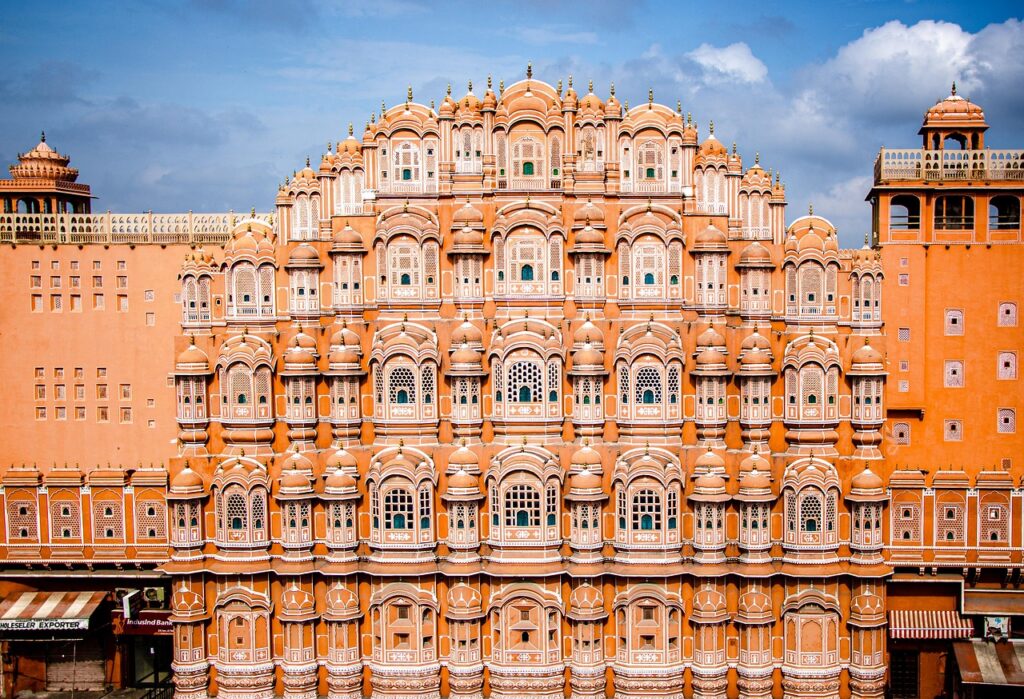
Hawa Mahal, also known as the Palace of Winds, is one of the most recognizable and photographed landmarks of Jaipur, Rajasthan. Located in the heart of the Pink City, this five-storey architectural marvel is a stunning example of Rajputana craftsmanship blended with Mughal aesthetics. Built entirely of red and pink sandstone, Hawa Mahal reflects the elegance, culture, and royal lifestyle of Rajasthan.
Historical Overview
- Hawa Mahal was constructed in 1799 by Maharaja Sawai Pratap Singh, the grandson of Maharaja Sawai Jai Singh.
- The palace was designed by the renowned architect Lal Chand Ustad.
- It was built as an extension of the City Palace and primarily served as a viewing gallery for royal women, allowing them to observe street festivals and daily life without being seen, following the purdah system.
- The structure was inspired by the shape of Lord Krishna’s crown, symbolizing devotion and artistic expression.
Architectural Highlights
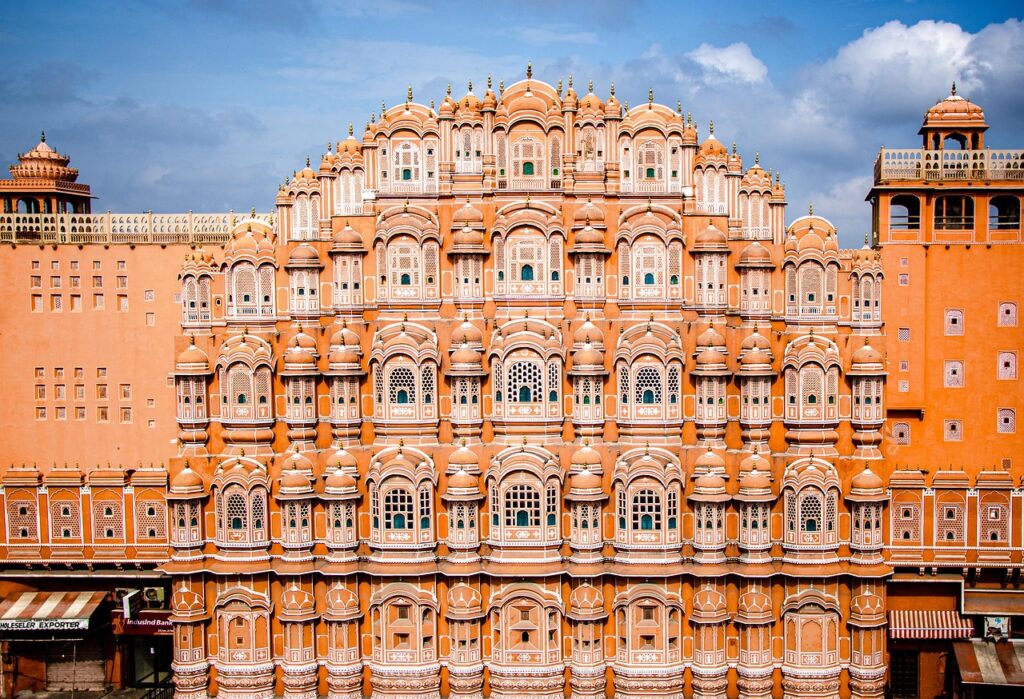
Hawa Mahal is a five-storey, pyramidal-shaped structure with a honeycomb-like façade. Unlike traditional palaces, it has no strong foundation and relies on a curved design for stability.
- Constructed using red and pink sandstone
- Features 953 small windows (jharokhas) with intricate latticework
- Designed to allow natural air circulation, keeping the interiors cool even during extreme summers
- A seamless blend of Rajput, Mughal, and Islamic architectural styles
Key Sections of Hawa Mahal
1. The Facade (Jharokhas & Windows)
- The most iconic feature of Hawa Mahal
- The 953 jharokhas are decorated with fine lattice (jali) work
- These windows allowed royal women to watch processions and festivals discreetly
- Also functioned as a natural cooling system by channeling cool air inside
2. Interior Chambers
- The interior is relatively simple compared to the exterior
- Narrow corridors and small chambers connected by ramps (not stairs)
- Designed specifically for queens and ladies-in-waiting
- Minimal ornamentation, focusing more on ventilation and privacy
3. Top Viewpoint
- The top floors offer panoramic views of Jaipur’s Pink City
- From here, visitors can see City Palace, Jantar Mantar, and busy bazaars
- Best spot for photography, especially in the morning
Why Is It Called Hawa Mahal?
The palace is called Hawa Mahal (Palace of Winds) because of its intelligent design that allows cool breezes to flow through the building at all times. Even during peak summer, the interiors remain airy and pleasant, making it a natural air-conditioned structure centuries before modern technology.
Location & Surroundings
- Situated on Badi Chaupar, in the old city of Jaipur
- Close to major attractions like City Palace and Jantar Mantar
- Surrounded by traditional markets selling handicrafts, jewelry, and textiles
Scenic & Photographic Appeal
- Best viewed from the street side in the morning, when sunlight enhances its pink hues
- The symmetrical façade creates a dramatic and royal visual impact
- One of the most Instagram-worthy monuments in India
Cultural Significance
- Represents the lifestyle and customs of Rajput royal women
- Symbolizes Jaipur’s identity as the Pink City
- A major inspiration for Rajasthani art, postcards, paintings, and tourism branding
Visitor Information
Timings:
- Open daily from 9:00 AM to 4:30 PM
Entry Fees:
- Indians: ₹50
- Foreign Tourists: ₹200
- Camera charges may apply
How to Reach:
- Easily accessible by auto-rickshaw, taxi, or cab from anywhere in Jaipur
- Located on the main road, no trekking required
Best Time to Visit:
- October to March for pleasant weather
- Early morning for fewer crowds and better photos
Tips for Visitors
- Wear comfortable footwear, as interiors involve walking ramps
- Visit early to avoid traffic and crowds
- Combine your visit with City Palace and Jantar Mantar for a complete heritage experience
- Carry water during summers
Conclusion
Hawa Mahal is not just a monument—it is a symbol of Jaipur’s royal heritage, architectural intelligence, and cultural elegance. With its iconic façade, historical relevance, and unique cooling design, the Palace of Winds continues to captivate travelers from around the world. A visit here is essential to truly understand the soul of Rajasthan and the grandeur of its past.
A walk past Hawa Mahal is like stepping into history—where every window whispers stories of royalty, tradition, and timeless beauty.



Key Highlights — Hawa Mahal
Hawa Mahal, a unique masterpiece of Rajputana architecture, is famous for its honeycomb façade, intelligent ventilation system, and royal cultural significance. Here’s a clear overview of its main highlights—Amber Fort–style 👇
1. Jharokhas (953 Windows)
- The most iconic feature of Hawa Mahal.
- 953 small jharokha windows with intricate jali (lattice) work.
- Designed for royal women to observe street life and festivals without being seen.
- Also act as a natural cooling system.
2. Facade (Palace of Winds Front View)
- Five-storey pyramidal façade resembling a honeycomb.
- Made of pink and red sandstone, matching Jaipur’s Pink City theme.
- One of the most photographed monuments in India.
3. Natural Ventilation Design
- Ingenious architecture allows cool air circulation throughout the palace.
- Keeps interiors airy even during Rajasthan’s intense summers.
- A centuries-old example of climate-responsive architecture.
4. Interior Chambers
- Simple interiors with small rooms and narrow corridors.
- Connected by sloping ramps instead of stairs, making movement easy for royal women.
- Focused more on functionality and privacy than luxury.
5. Top Viewpoint (City View Terrace)
- Offers panoramic views of Jaipur’s Pink City.
- Visible landmarks include City Palace, Jantar Mantar, and old bazaars.
- Best spot for photography, especially in the morning.
6. No Strong Foundation
- Surprisingly, Hawa Mahal has no deep foundation.
- Its curved, lightweight design keeps it stable even today.
- A remarkable example of advanced traditional engineering.
7. Cultural & Royal Significance
- Built to follow the purdah system of Rajput royalty.
- Symbolizes the lifestyle, dignity, and traditions of royal women.
- Considered an architectural identity of Jaipur.
8. Connection with City Palace
- Hawa Mahal was built as an extension of City Palace.
- Allowed royal women direct access to observation galleries.
9. Morning Light Experience
- Early morning sunlight enhances the pink hues of the façade.
- Creates a glowing effect, making it ideal for visitors and photographers.
10. Architectural Style
- A graceful blend of Rajput, Mughal, and Islamic architecture.
- Features floral patterns, lattice screens, and symmetry-focused design.
Conclusion
Each element of Hawa Mahal—from its airy windows to its iconic façade—reflects intelligence, elegance, and royal culture. Unlike massive forts, Hawa Mahal impresses through innovation, symbolism, and aesthetic beauty, making it a must-visit landmark of Rajasthan.
A palace that doesn’t dominate by size—but by design 🌬️🏰
History — Hawa Mahal
Hawa Mahal, one of Jaipur’s most iconic landmarks, stands as a symbol of Rajput elegance, architectural intelligence, and royal lifestyle. Unlike massive forts built for defense, Hawa Mahal was designed with a unique social and cultural purpose, making it an exceptional monument in Rajasthan’s history.
1. Origin and Construction
- Hawa Mahal was built in 1799 by Maharaja Sawai Pratap Singh, the ruler of Jaipur.
- The palace was designed by the talented architect Lal Chand Ustad.
- It was constructed as an extension of the City Palace, not as an independent fort or royal residence.
- The structure was specially built for the royal women of the Kachwaha Rajput dynasty.
2. Architectural Inspiration and Style
- The design of Hawa Mahal is inspired by the crown of Lord Krishna, reflecting the devotion of Maharaja Sawai Pratap Singh.
- Built using red and pink sandstone, it perfectly complements Jaipur’s identity as the Pink City.
- The architecture is predominantly Rajput, with subtle Mughal influences visible in arches and decorative elements.
3. Purpose: Life Behind the Veil
- The primary purpose of Hawa Mahal was to allow royal women, who followed the purdah system, to observe:
- Religious processions
- Royal ceremonies
- Daily life and festivals of the city
- The palace’s 953 small jharokha windows enabled them to look outside without being seen.
4. Engineering Brilliance and Ventilation
- Hawa Mahal was designed as a natural ventilation system.
- Cool air flows continuously through the numerous windows, keeping the interiors comfortable even during extreme summers.
- Remarkably, the palace has no deep foundation—its curved, lightweight structure ensures stability.
5. Role After the Establishment of Jaipur
- Jaipur was founded earlier in 1727 by Maharaja Sawai Jai Singh II, but Hawa Mahal became an important architectural addition later.
- After its construction, Hawa Mahal played a key role as a cultural and observational space, rather than a political or administrative center.
6. During the British Period
- Under British rule, Hawa Mahal had no military significance.
- However, it continued to attract admiration for its unique façade and innovative design.
- The palace remained well-preserved due to its symbolic importance to Jaipur.
7. Preservation and Modern Recognition
- After India’s independence, Hawa Mahal was declared a protected heritage monument.
- Today, it is one of the most visited tourist attractions in Rajasthan.
- It stands as an enduring representation of Jaipur’s royal past and architectural creativity.
8. Cultural and Symbolic Importance
- Hawa Mahal is often regarded as the architectural identity of Jaipur.
- It symbolizes grace, privacy, and intelligent design rather than power or military strength.
- The palace frequently appears in art, literature, postcards, and tourism promotions of Rajasthan.
Conclusion
Hawa Mahal is not merely a historical structure—it is a reflection of Rajput values, artistic vision, and social customs. Built for observation rather than dominance, it tells a softer yet profound story of royal life in Rajasthan. Even today, its countless windows seem to whisper tales of tradition, elegance, and timeless beauty carried by the winds of Jaipur 🌬️🏰
Culture — Hawa Mahal
Hawa Mahal, though not a fort like Amber, is deeply connected to the cultural, social, and royal traditions of Rajasthan. It reflects the refined lifestyle of Rajput royalty, especially the role of royal women, and stands as a symbol of grace, privacy, and architectural intelligence within Rajputana culture.
1. Rajput Culture and Royal Traditions
Hawa Mahal was built during the reign of the Kachwaha Rajputs, a powerful Rajput clan of Jaipur.
- Royal Women and Purdah System:
Rajput society strictly followed the purdah system. Hawa Mahal was designed so that royal women could observe street life, festivals, and royal processions without appearing in public. - Symbol of Dignity and Grace:
Unlike forts built to display power and military strength, Hawa Mahal reflects the elegance, dignity, and refined values of Rajput culture.
2. Social Life and Daily Observations
Hawa Mahal played a unique role in the everyday royal life of Jaipur.
- The palace acted as a royal observation gallery overlooking busy bazaars and ceremonial routes.
- Queens and princesses watched:
- Religious processions
- Royal parades
- Festivals and daily market life
- This connection allowed the royal household to stay culturally connected with the city while maintaining tradition.
3. Religious and Spiritual Influence
Religion was central to Rajput life, and this influence is reflected in Hawa Mahal’s design and symbolism.
- The structure is believed to be inspired by the crown of Lord Krishna, showing deep Vaishnav devotion.
- The royal women observed Janmashtami, Diwali, Teej, Gangaur, and other festivals from the jharokhas.
- These festivals were an essential part of Jaipur’s cultural rhythm.
4. Mughal Cultural Influence
While primarily Rajput in spirit, Hawa Mahal also reflects subtle Mughal influence.
- The use of arched windows, symmetry, and floral motifs shows Mughal artistic inspiration.
- The concept of combining beauty with comfort—especially ventilation—was influenced by Mughal architectural practices.
5. Art, Craft, and Aesthetic Sensibility
Hawa Mahal showcases Rajasthan’s artistic excellence.
- Jali (lattice) work represents traditional craftsmanship and attention to detail.
- Minimal interiors reflect a functional aesthetic, focusing on airflow and light rather than heavy ornamentation.
- The exterior façade became a cultural icon, often represented in paintings, miniature art, and modern tourism branding.
6. Music, Festivals, and City Life
- During festivals, the streets below Hawa Mahal came alive with folk music, dancers, and processions.
- Royal women listened to shehnai, dhol, and traditional Rajasthani folk music from behind the windows.
- The palace thus became a silent yet active participant in Jaipur’s cultural celebrations.
7. Role in Jaipur’s Cultural Identity
- Hawa Mahal is today regarded as the architectural face of Jaipur.
- It represents a culture where tradition, beauty, privacy, and innovation coexisted harmoniously.
- Unlike war-centric monuments, it tells a softer story of royal life, women’s spaces, and cultural observation.
Conclusion
The culture of Hawa Mahal is not defined by battles or power, but by tradition, elegance, and social values. It reflects how Rajput royalty balanced strict customs with artistic expression and innovation. Even today, Hawa Mahal stands as a timeless cultural symbol of Rajasthan—where architecture speaks of history, heritage, and human sensibility carried gently by the winds of Jaipur 🌬️🏰
Fee & Charges — Hawa Mahal
Hawa Mahal Entry Charges
Indian Citizens:
- Entry Fee: ₹50 per person
Foreign Tourists:
- Entry Fee: ₹200 per person
Students:
- Concessional tickets may be available with a valid student ID.
Camera Charges
- Still Camera: Usually included in the ticket (may vary)
- Video Camera: Additional charges may apply if applicable
(Rules can change, so it’s best to confirm at the ticket counter.)
Additional Charges
- Local Guide Charges: ₹200 – ₹400 (approx., depending on duration and language)
- Audio Guide: Available at some counters (charges may vary)
Opening Hours
- Hawa Mahal Timings:
9:00 AM – 4:30 PM (Open all days)
(There is no Light & Sound Show at Hawa Mahal.)
Best Time to Visit
- Early morning for fewer crowds and best photographs
- October to March offers the most pleasant weather
Important Notes
- Hawa Mahal is located on a busy main road, so plan your visit accordingly.
- The best exterior view is from the street side, while entry is from the rear side.
- Comfortable footwear is recommended due to ramps and walking inside.
Disclaimer
All charges mentioned above are approximate and may change depending on government regulations or seasonal updates. It is advisable to check the latest ticket prices before visiting.
Hawa Mahal — photos
Ratings & reviews
No one has rated Hawa Mahal yet.
Write a reviewHawa Mahal — travel FAQs
Where is Hawa Mahal located?
When and by whom was Hawa Mahal built?
Who was the architect of Hawa Mahal?
Why is Hawa Mahal called the “Palace of Winds”?
How many windows does Hawa Mahal have?
What architectural style does Hawa Mahal represent?
What was the main purpose of Hawa Mahal?
What are the visiting hours of Hawa Mahal?
What is the entry fee for Hawa Mahal?
What is the best time to visit Hawa Mahal?
Wayntra app
Plan Your Next Adventure with Wayntra
Discover treks, local guides, travel experiences and adventure activities on the Wayntra app.
More places in Rajasthan

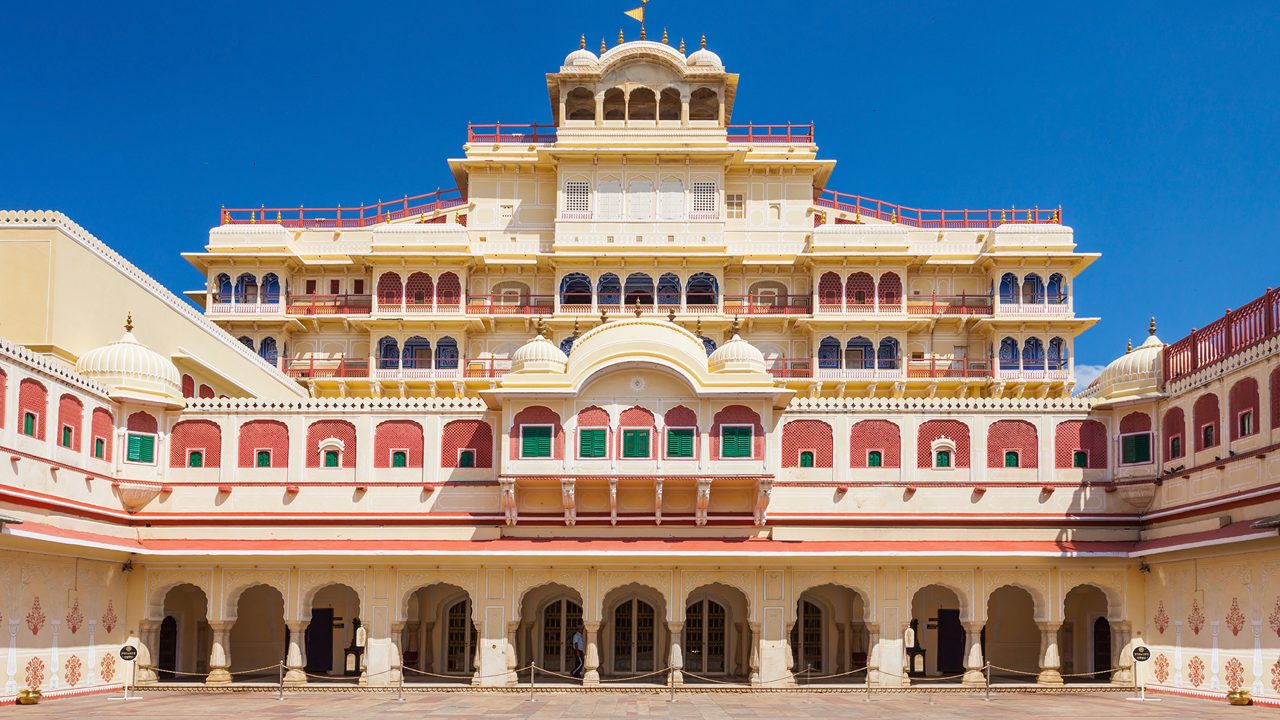
Travel partners near Hawa Mahal
Naresh tour and travels
A 35 agarsen vihar colony shree ram ki nangal goner mod

Tripwala Foji
Kalyanpur, Meerut (U.P), pin -250502

Traipchaska Holidays
Shivanand puri mahapura vaya bhankrota ajmer road jaipur

Vardan Tour And Travel Haridwar
Haridwar kankhal Bangali mod

Jaipur Holiday Tour and Travels
Kamla Nehru Nagar puliya Jaipur Ajmer road

Salasar Tour And Travel
37RV+77C, Jaliya Road, Theekrana Medratan, Moti Nagar, Beawar, Rajasthan 305901, India

Akki Tour & Travels
H.No.753 St.No.7 Gurubax Calony Patiala
JMR Travels
9/10, Laxmi Narayan Bansal Marg, Block C, Mianwali Nagar, Paschim Vihar, Delhi, 110087, India