India’s local-first travel ecosystem — book local operators direct, zero commission

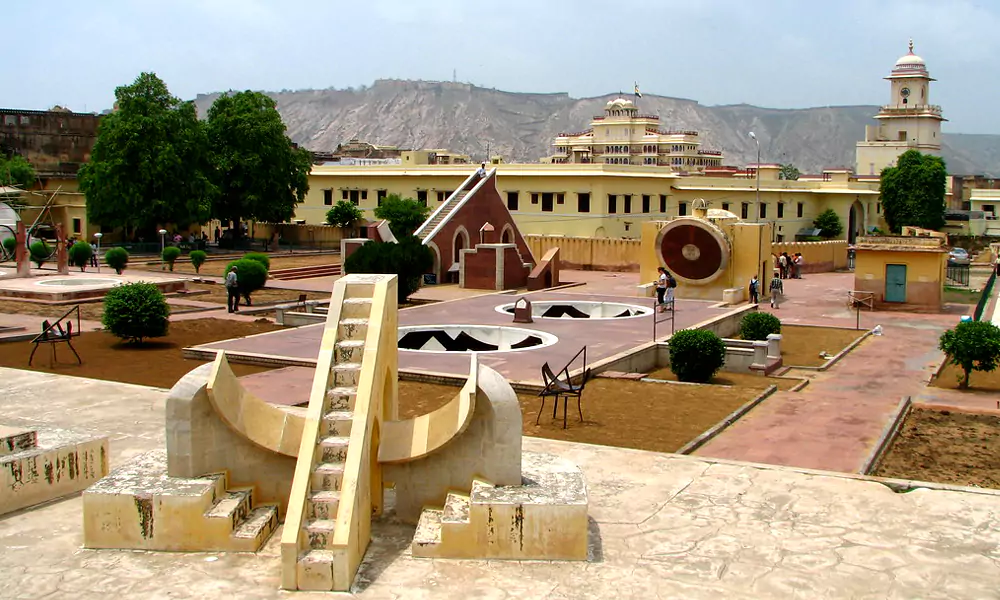
Jantar Mantar, Jaipur
Jaipur, Rajasthan

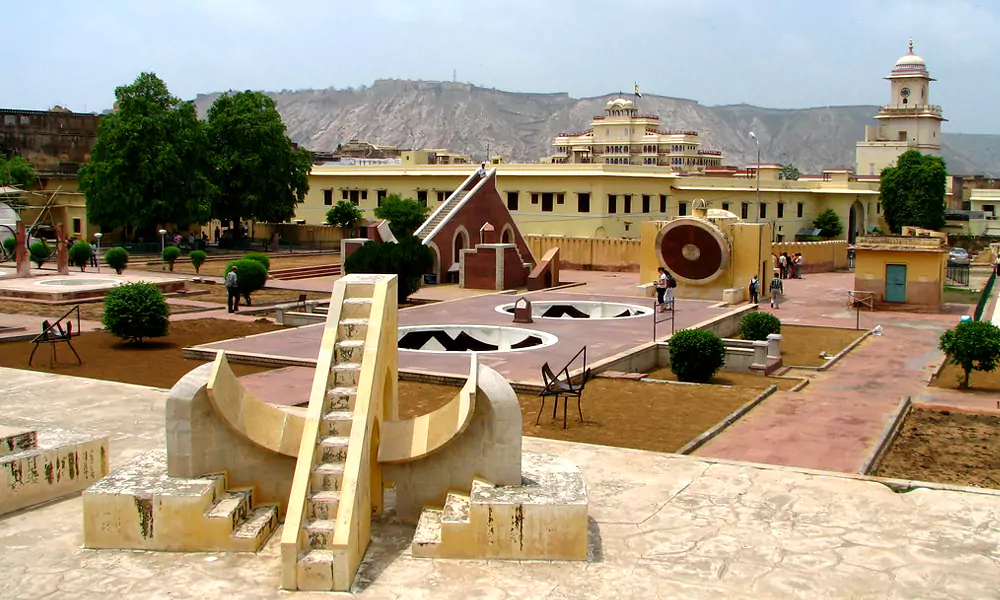
Jantar Mantar, Jaipur is one of the most extraordinary scientific monuments in India and a proud symbol of Jaipur’s intellectual heritage. Located near the City Palace in the heart of the Pink City, this 18th-century astronomical observatory is a fascinating blend of science, mathematics, architecture, and art. Built with massive stone instruments, Jantar Mantar showcases how advanced astronomical knowledge flourished in India centuries before modern technology.
Historical Overview
- Jantar Mantar was constructed between 1728 and 1734 by Maharaja Sawai Jai Singh II, the founder of Jaipur
- He was a scholar of astronomy, mathematics, and architecture
- Jaipur’s Jantar Mantar is the largest and best-preserved among the five observatories built by him across India
- The name Jantar Mantar is derived from Yantra Mantra, meaning “instruments and formulas”
Purpose & Scientific Importance
Jantar Mantar was designed to:
- Measure time with extreme accuracy
- Track the movement of the sun, moon, and planets
- Predict eclipses
- Study celestial positions and zodiac signs
All of this was achieved without telescopes or electronic devices, using only stone, geometry, and precise calculations.
Architectural Highlights
- Comprises 19 large-scale astronomical instruments
- Built using local stone and marble
- Instruments are aligned with celestial coordinates for precision
- Combines scientific accuracy with monumental architecture
In 2010, Jantar Mantar, Jaipur was declared a UNESCO World Heritage Site, recognizing its global scientific and cultural value.
Key Instruments at Jantar Mantar
Samrat Yantra (Supreme Instrument)
- The world’s largest stone sundial
- Measures time accurate to 2 seconds
- Its shadow moves visibly with the sun
Jai Prakash Yantra
- Bowl-shaped instruments representing the sky
- Used to determine the position of celestial bodies
Ram Yantra
- Measures altitude and azimuth of stars and planets
Location & Surroundings
- Situated next to City Palace, Jaipur
- At walking distance from Hawa Mahal
- Close to traditional bazaars and heritage streets
Visitor Information
Timings:
Open daily from 9:00 AM to 4:30 PM
Entry Fees (Approx.):
- Indians: ₹50
- Foreign Tourists: ₹200
Best Time to Visit:
- October to March for pleasant weather
- Morning hours for better understanding and photography
Why Visit Jantar Mantar, Jaipur?
- A rare monument where science meets heritage
- Ideal for history lovers, students, and curious travelers
- Demonstrates India’s advanced scientific thinking in the 18th century
- One of the most educational yet visually striking attractions in Jaipur
Conclusion
Jantar Mantar, Jaipur is not just a historical site—it is a living example of human curiosity and scientific brilliance. Standing among these massive instruments, one truly appreciates how deeply astronomy was understood and respected in ancient India.
A visit to Jantar Mantar is like stepping into a giant open-air laboratory, where stone instruments silently narrate stories of stars, time, and timeless wisdom.



Key Highlights — Jantar Mantar, Jaipur
1. Samrat Yantra (World’s Largest Sundial)
- The most iconic instrument at Jantar Mantar
- Measures local time with accuracy up to 2 seconds
- A massive triangular gnomon casting a precise shadow
2. Giant Stone Instruments (19 Yantras)
- The complex houses 19 large-scale astronomical instruments
- Built to observe celestial movements with the naked eye
- Each yantra serves a specific scientific purpose
3. Jai Prakash Yantra
- Bowl-shaped instruments representing the sky
- Used to locate positions of stars, planets, and the sun
- A brilliant 3D model of celestial mapping
4. Ram Yantra
- Cylindrical structures without roof or pillars
- Measures altitude and azimuth of celestial bodies
- Rare example of open-sky astronomical design
5. Precision Without Modern Technology
- Built entirely of stone and marble
- No telescopes, electronics, or modern tools used
- Relies purely on geometry, angles, and alignment
6. Scientific Purpose
- Accurate time calculation
- Planetary position tracking
- Eclipse prediction
- Zodiac and calendar studies
7. Architectural + Mathematical Brilliance
- Instruments aligned with Earth’s axis
- Perfect balance of science and monumental architecture
- Built at human scale—visitors can walk inside instruments
8. UNESCO World Heritage Site
- Declared a UNESCO World Heritage Site in 2010
- Recognized globally for its scientific and cultural value
9. Location Advantage
- Situated next to City Palace, Jaipur
- Walking distance from Hawa Mahal
- Part of Jaipur’s prime heritage circuit
10. Living Observatory Experience
- Instruments still work accurately today
- Visitors can see time moving via shadows
- Feels like walking inside a giant open-air laboratory
Conclusion
Unlike palaces built for luxury, Jantar Mantar impresses through logic, scale, and scientific intelligence. Every structure here turns stone into data and architecture into astronomy.
It doesn’t just show history—it demonstrates how time itself was measured ⏳🌌
History — Jantar Mantar, Jaipur
Jantar Mantar, Jaipur, one of the most remarkable scientific monuments in the world, stands as a symbol of India’s advanced astronomical knowledge, mathematical precision, and intellectual legacy.
Unlike palaces and forts built for luxury or defense, Jantar Mantar was created purely for scientific observation and understanding of the cosmos, making it a unique landmark in Rajasthan’s history.
1. Origin and Construction
- Jantar Mantar was built between 1728 and 1734 by Maharaja Sawai Jai Singh II, the founder of Jaipur
- He was a renowned scholar of astronomy, mathematics, and architecture
- The observatory was constructed to reform astronomical calculations used in calendars and rituals
- Jaipur’s Jantar Mantar is the largest and best-preserved among the five observatories built by him in India
2. Scientific Inspiration and Vision
- Inspired by ancient Indian astronomy and Islamic astronomical texts
- Designed to improve the accuracy of timekeeping and celestial measurements
- Built at a monumental scale to reduce observational errors
- Reflects a deep belief that science and governance must go hand in hand
3. Purpose: Understanding Time and the Universe
The primary purpose of Jantar Mantar was to:
- Measure local time with extreme precision
- Track the movement of the Sun, Moon, and planets
- Predict solar and lunar eclipses
- Study zodiac signs and planetary positions
All observations were made with the naked eye, without telescopes or modern instruments.
4. Engineering Brilliance and Accuracy
- Constructed entirely of stone and marble
- Each instrument is aligned with the Earth’s axis and celestial coordinates
- Uses geometry, angles, and shadows instead of mechanical parts
- Many instruments remain accurate even today, centuries after construction
5. Key Astronomical Instruments
- Samrat Yantra – The world’s largest stone sundial, accurate to about 2 seconds
- Jai Prakash Yantra – Bowl-shaped instruments representing the celestial sphere
- Ram Yantra – Used to measure altitude and azimuth of celestial bodies
Together, there are 19 large-scale astronomical instruments within the complex.
6. Role After the Establishment of Jaipur
- Jaipur was founded in 1727, and Jantar Mantar became a core intellectual institution of the city
- It served as a working observatory, not a symbolic structure
- Astronomers actively used it for calculations related to calendars and rituals
7. During the British Period
- Under British rule, Jantar Mantar lost its official scientific role
- Western instruments replaced traditional observational methods
- Despite this, the site was respected and preserved due to its uniqueness
8. Preservation and Global Recognition
- After India’s independence, Jantar Mantar was protected as a heritage monument
- In 2010, it was declared a UNESCO World Heritage Site
- Today, it is one of Jaipur’s most important educational and tourist attractions
9. Cultural and Symbolic Importance
- Represents India’s scientific temperament in the pre-modern era
- Symbolizes the harmony of science, art, and architecture
- Considered an architectural identity of Jaipur alongside Hawa Mahal and City Palace
Conclusion
Jantar Mantar is not just an observatory—it is a bold statement of human curiosity and intellectual ambition. Built to understand time rather than display power, it reflects a civilization that valued knowledge as the highest authority.
Even today, its silent stone instruments continue to narrate stories of stars, seasons, and a timeless quest to understand the universe 🌌⏳
Culture — Jantar Mantar, Jaipur
Jantar Mantar, Jaipur – A Symbol of Knowledge, Culture, and Scientific Wisdom
Jantar Mantar, Jaipur represents a cultural tradition where knowledge, time, and cosmic order were central to governance and daily life. Unlike forts that symbolized military power or palaces that displayed royal luxury, Jantar Mantar stands as a monument to intellectual discipline, scientific curiosity, and cultural responsibility in Rajputana history.
1. Rajput Culture and Intellectual Tradition
Jantar Mantar was built by Maharaja Sawai Jai Singh II of the Kachwaha Rajput dynasty.
For Rajput rulers, governance was not limited to warfare—it also required mastery over timekeeping, astronomy, and cosmic alignment.
Jantar Mantar reflects this enlightened Rajput belief that knowledge was a form of power and duty.
2. Connection with Social and Religious Life
In traditional Rajput society:
- Auspicious timings
- Religious rituals
- Festivals and royal ceremonies
were all governed by precise astronomical calculations.
Observations made at Jantar Mantar directly influenced calendars, rituals, and social practices, making it deeply embedded in everyday cultural life.
3. Harmony Between Science and Spirituality
Jantar Mantar proves that in pre-modern India, science and spirituality coexisted harmoniously.
Astronomical observations were essential for:
- Panchang (Hindu calendar) preparation
- Eclipse predictions
- Planetary and zodiac studies
- The observatory reflects a worldview where understanding the universe was seen as a spiritual and intellectual pursuit.
4. Influence of Islamic and Mughal Knowledge
While rooted in Indian tradition, Jantar Mantar also shows influence from:
- Islamic astronomy
- Persian and Arabic scientific texts
This reflects the era’s cross-cultural exchange of knowledge, where ideas traveled freely across regions and civilizations.
5. Mathematics as Art and Architecture
Jantar Mantar is not only scientific but also visually powerful:
- Monumental geometric forms
- Perfect symmetry and proportions
- Open interaction with the sky
Here, mathematics transforms into architecture, and science becomes a form of artistic expression.
6. Relationship with the City and Its People
Located beside the City Palace and within Jaipur’s urban core, Jantar Mantar was designed as a functional public institution, not a hidden scholarly space.
It symbolized the idea that knowledge should guide the state and serve society.
7. Role in Jaipur’s Cultural Identity
Today, Jantar Mantar is recognized as:
- Jaipur’s intellectual landmark
- A symbol of India’s scientific heritage
- A UNESCO World Heritage Site
Where Hawa Mahal reflects grace, privacy, and social culture, Jantar Mantar represents discipline, reason, and the culture of time.
Conclusion
The culture of Jantar Mantar is not defined by conquest or display, but by curiosity, precision, and wisdom.
It tells the story of a civilization that valued understanding the universe as much as ruling the land.
Even today, its silent stone instruments continue to express a timeless cultural truth—that knowledge is the most enduring legacy of all ⏳🌌
Fee & Charges — Jantar Mantar, Jaipur
Jantar Mantar Entry Charges
Indian Citizens:
- Entry Fee: ₹50 per person
Foreign Tourists:
- Entry Fee: ₹200 per person
Students:
- Concessional tickets may be available with a valid student ID
Camera Charges
- Still Camera: Usually included in the entry ticket
- Video Camera: Additional charges may apply, if applicable
(Rules may change, so it’s best to confirm at the ticket counter.)
Additional Charges
- Local Guide Charges: ₹200 – ₹400 (approx., depending on language and duration)
- Audio Guide: May be available at select counters (charges vary)
Opening Hours
Jantar Mantar Timings:
- 9:00 AM – 4:30 PM
- Open all days of the week
(There is no Light & Sound Show at Jantar Mantar.)
Best Time to Visit
- Morning hours for clearer understanding of instruments and better photos
- October to March for pleasant weather and comfortable exploration
Important Notes
- Jantar Mantar is an open-air monument, so carry a cap or umbrella in summer
- Walking inside and around large stone instruments is required
- Guides are highly recommended for better understanding of the scientific instruments
- Located close to City Palace and Hawa Mahal, making it easy to cover in one visit
Disclaimer
All charges and timings mentioned above are approximate and may change due to government regulations or seasonal updates. Visitors are advised to check the latest ticket prices at the official counter before entry.
Jantar Mantar, Jaipur — photos
Ratings & reviews
No one has rated Jantar Mantar, Jaipur yet.
Write a reviewJantar Mantar, Jaipur — travel FAQs
What is Jantar Mantar, Jaipur?
Who built Jantar Mantar?
जंतर मंतर कहाँ स्थित है?
Why is Jantar Mantar famous?
How many instruments are there?
Which is the most famous instrument?
What are the visiting hours?
घूमने का सबसे अच्छा समय?
Wayntra app
Plan Your Next Adventure with Wayntra
Discover treks, local guides, travel experiences and adventure activities on the Wayntra app.
More places in Rajasthan



Travel partners near Jantar Mantar, Jaipur

Naresh tour and travels
A 35 agarsen vihar colony shree ram ki nangal goner mod

Tripwala Foji
Kalyanpur, Meerut (U.P), pin -250502

Traipchaska Holidays
Shivanand puri mahapura vaya bhankrota ajmer road jaipur

Vardan Tour And Travel Haridwar
Haridwar kankhal Bangali mod

Jaipur Holiday Tour and Travels
Kamla Nehru Nagar puliya Jaipur Ajmer road

Salasar Tour And Travel
37RV+77C, Jaliya Road, Theekrana Medratan, Moti Nagar, Beawar, Rajasthan 305901, India

Akki Tour & Travels
H.No.753 St.No.7 Gurubax Calony Patiala

JMR Travels
9/10, Laxmi Narayan Bansal Marg, Block C, Mianwali Nagar, Paschim Vihar, Delhi, 110087, India